Top content modeling challenges teams must fix
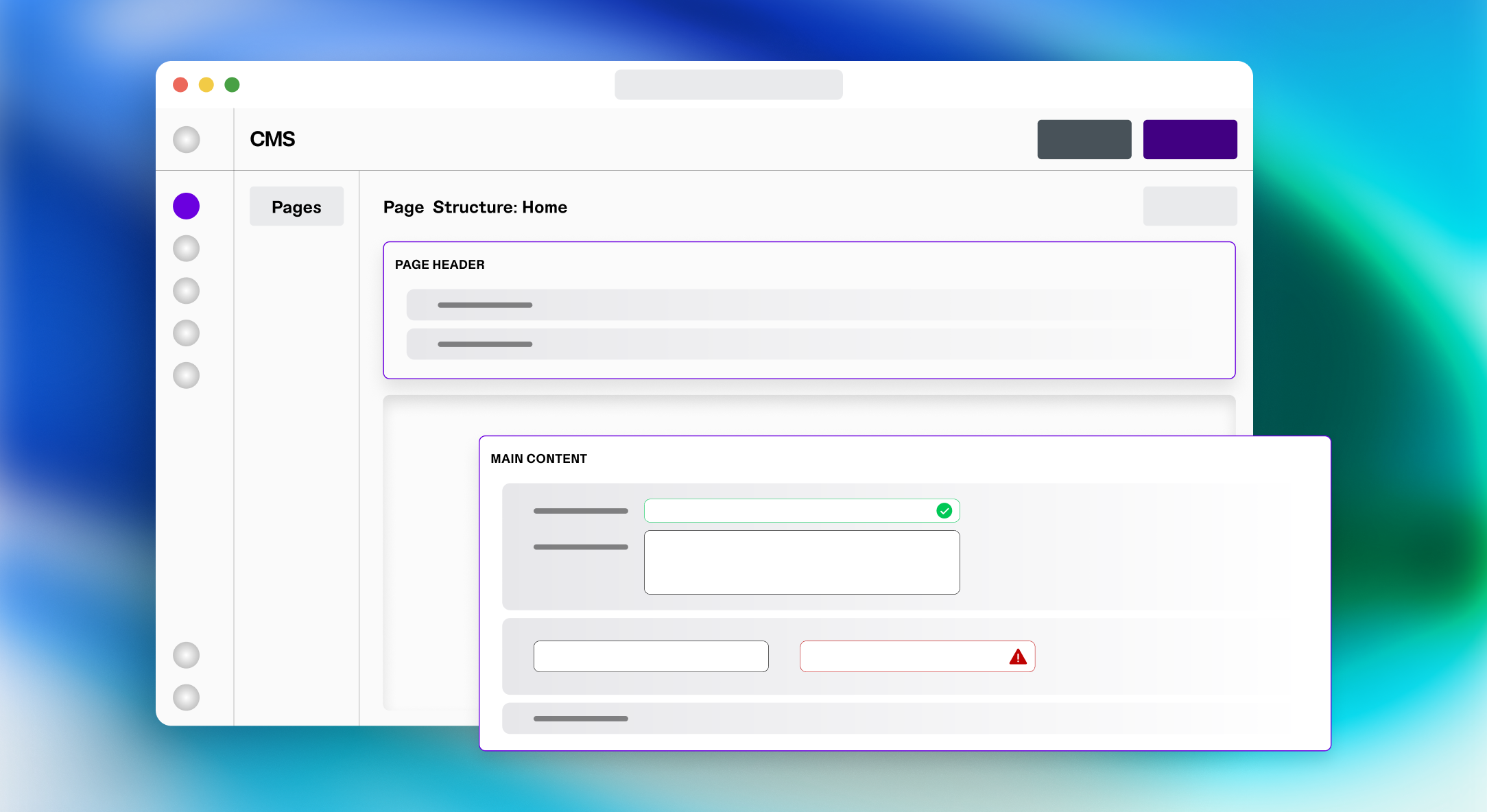
Enterprises moving to composable and headless architectures routinely hit the same friction point: content modeling. content modeling challenges headless CMS often show up as duplicated content types, inconsistent field usage, or brittle content that breaks experiences downstream. Imagine launching a global campaign and discovering that localized product pages render incorrectly because an editorial team used a free-text field instead of a structured price object—costly delays and frustrated stakeholders follow.
This article dissects the common content modeling challenges headless CMS teams face, explains the business impact, and provides an actionable list of fixes you can implement immediately. What this guide will cover: the strategic stakes of poor content modeling, a prioritized list of concrete problems and solutions.
Poor content modeling is not an editorial nuisance. It is an operational and strategic liability. When content models are inconsistent or under-designed, development velocity slows, integrations become fragile, content reuse is limited, and time-to-market for new digital experiences lengthens. For enterprises running dozens of brands or regions, these inefficiencies compound into real financial drag: increased development costs, higher maintenance overhead, and missed revenue opportunities.
If ignored, content model drift leads to technical debt that’s costly to repay. Teams will build bespoke front-end workarounds, spawn multiple APIs, and create parallel data sources that undermine governance and analytics. Decision-makers should care because content modeling impacts customer experience consistency, security and compliance (through uncontrolled fields), and the ability to scale personalization. Good content models enable agility; poor ones force trade-offs between speed and control.
1. Overly rigid models that hinder reuse
A common enterprise mistake is designing content models that perfectly fit today’s page templates but cannot be repurposed for new channels. Teams create a “page” content type with tightly coupled fields for layout, leading to duplication when a new channel (mobile app, in-store kiosk, voice assistant) needs the same content in a different shape.
2. Unstructured fields that break downstream systems
Free-text or rich-text fields are convenient for editors but create issues when content must be parsed for automation, personalization, or syndicated feeds. Unstructured copy requires regular expressions or content parsing layers, which are brittle and expensive to maintain.
Practical insight: Favor structured fields for content that requires system-level interpretation—dates, prices, product specifications, CTAs, ratings, and image metadata. Reserve rich text for editorial copy that does not drive logic. When rich text is necessary, establish constraints (allowed components, embed rules) and use rich-text schemas that include semantic markers.
3. Poor localization and multi-region modeling
Enterprises often treat localization as a translation layer rather than as first-class modeling consideration. This leads to content models that can’t represent regional product differences, legal copy variants, pricing, or market-specific media.
Practical insight: Model localization explicitly. Use language- and region-qualified fields, separate translatable text from regional configuration data (pricing, legal content), and treat local entities as derivatives of a canonical master where appropriate. Support fallback rules and inheritance but be explicit about where local overrides are permitted.
4. Inconsistent taxonomy and metadata
Without a shared taxonomy and metadata strategy, tagging becomes idiosyncratic, search relevance suffers, and automated personalization is impossible. Teams invent category names, tag synonyms, and inconsistent metadata formats that confuse downstream systems.
Practical insight: Implement a governance-driven taxonomy with clear definitions, controlled vocabularies, and hierarchical categories. Treat taxonomy as a product: version it, document it, and provide a change-request workflow.
5. Missing or weak relationships between content types
A headless CMS excels when content entities are well-related—allowing reuse and dynamic composition. Many teams treat content types as silos, neglecting references and relationships, which causes duplication and makes updates laborious.
Practical insight: Model relationships explicitly: references, many-to-many relationships, and nested objects. Use relationship types to represent business intent—ownership, association, substitution.
6. Governance gaps and lack of change control
Content models evolve, but without governance, small edits create breaking changes. Editors add ad-hoc fields; developers make untracked API changes. This leads to continuous fragility and hotfixes.
Practical insight: Implement model governance: approvals for model changes, semantic versioning, and deprecation policies. Treat content model changes with the same rigor as API changes.
7. Technical constraints and performance bottlenecks
CMS platforms and delivery APIs have limits—large nested content, excessive references, or oversized assets can slow delivery and inflate costs. Poorly designed models can force complex queries that degrade performance.
Practical insight: Design with delivery constraints in mind. Limit nesting depth, prefer references over deep embeddings, and paginate large lists. Use views or GraphQL fragments to fetch only necessary data for a rendering context.
8. Insufficient tooling and editor experience
If editors lack contextual UI for structured fields—such as content previews, validation messages, or component previews—they will adopt workarounds that undermine the model. Good tooling enforces model discipline.
Practical insight: Invest in editorial UX: preview panes, in-context help, field-level descriptions, and component libraries in the CMS. Provide templates or content snippets for common patterns.
9. Misaligned KPIs and organizational silos
Content modeling success requires cross-functional alignment. When KPIs live in separate teams—marketing measured by published pages, engineering measured by deploys—no one is accountable for long-term model health.
Practical insight: Define shared KPIs tied to content model outcomes: reuse rate, time-to-launch for new channels, error rates from content-related incidents, and localization throughput. Make model health part of product roadmaps and operational dashboards.
Addressing content modeling challenges headless CMS-style transforms content from a tactical asset into a strategic capability. Properly designed models reduce duplication, speed up launches, improve personalization, and lower maintenance overhead. For enterprises, the ROI is real: faster time-to-market, fewer production incidents, and higher engagement through consistent experiences.
If you want to reduce technical debt and unlock reuse across channels, start with a focused audit, enforce governance, and treat models as productized assets.